Content marketing requires a delicate balance of creativity and technical strategy. You can spend weeks crafting the perfect blog post, complete with original research and compelling graphics. If search engines do not recognize your website as an authoritative source, your target audience will never see that content. This is the persistent challenge that digital marketers face.
Building authority organically takes an immense amount of time and resources. You have to publish consistently, promote heavily on social media, and hope that other webmasters discover your content and decide to link to it. For businesses looking to scale quickly, hope is not a reliable strategy. Companies need predictable, measurable methods to increase their search visibility and drive qualified traffic to their websites.
This brings us to one of the most debated but highly effective tactics in search engine optimization: acquiring paid backlinks. When executed correctly, a paid link-building strategy can act as a catalyst for your content marketing efforts. It bridges the gap between creating excellent content and actually getting it ranked on search engine results pages.
This comprehensive guide explores how paid link acquisition fits into a modern SEO strategy. We will examine the unique challenges of the American search market, how to safely integrate paid links into your broader marketing campaigns, and what steps you must take to ensure long-term ranking success.
Understanding Backlinks in Content Marketing
Search engines use complex algorithms to determine which pages should rank for specific queries. While these algorithms evaluate hundreds of different factors, backlinks remain one of the most heavily weighted signals. A backlink acts as a digital vote of confidence from one website to another. When a reputable site links to your content, it tells search engines that your information is valuable, trustworthy, and worth showing to users.
In the context of content marketing, backlinks are the fuel that powers your engine. You might have a perfectly optimized landing page or an incredibly detailed white paper. Without inbound links pointing to those assets, search engines view them as isolated islands of information. Backlinks create pathways for search engine crawlers to discover your content and understand its relationship to the rest of the internet.
Organic link building involves strategies like email outreach, broken link building, and creating highly shareable infographics. These methods are certainly valuable, but they are also highly unpredictable. You might send out five hundred outreach emails and secure only a handful of placements. This low conversion rate drains marketing budgets and delays the return on investment for your content creation efforts.
Paid link building offers a solution to this unpredictability. By treating link acquisition as a direct investment rather than a hopeful byproduct of outreach, marketers can secure placements on high-quality websites with guaranteed traffic metrics. This direct approach allows for better forecasting, tighter control over anchor text, and faster ranking improvements.
Why the USA Market is Unique for SEO
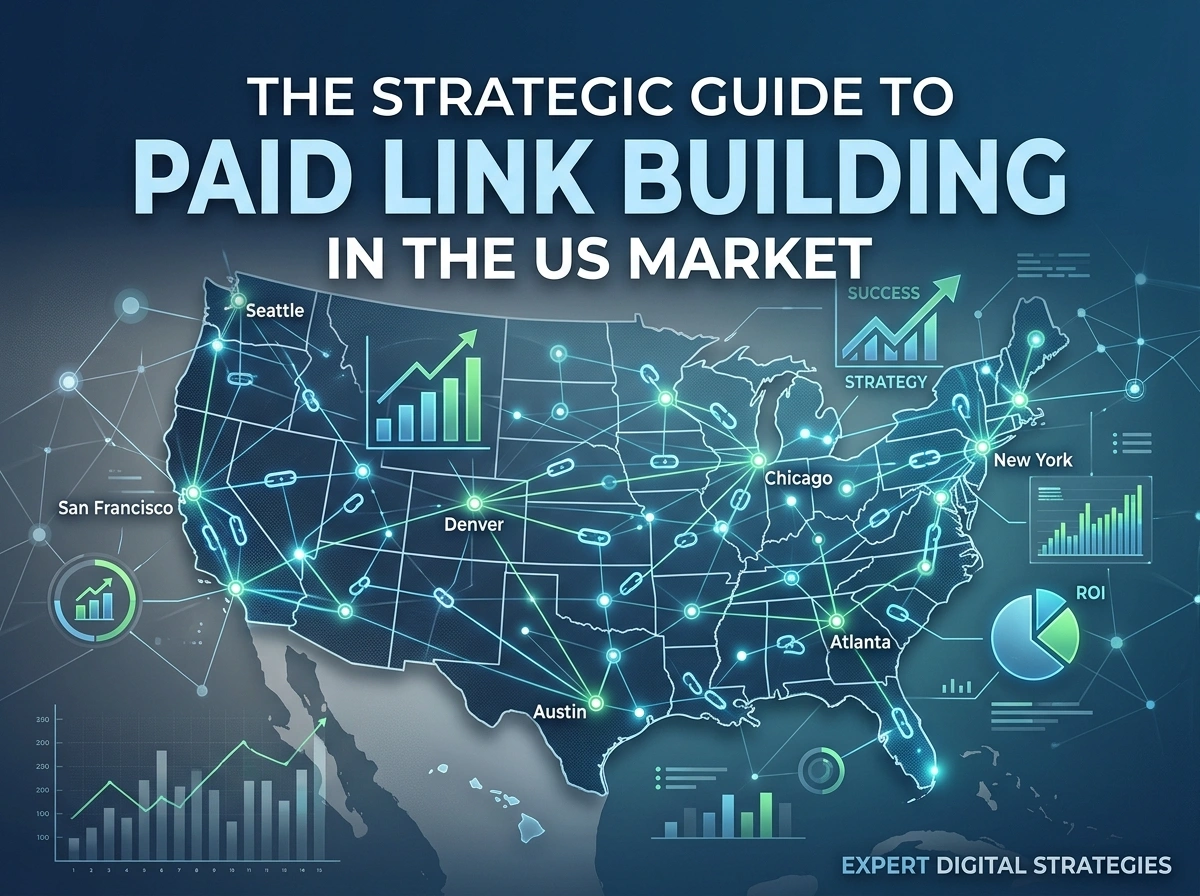
The United States represents the largest and most lucrative digital market in the world. Consumers in the US rely heavily on search engines to make purchasing decisions, research software solutions, and find local service providers. Because the potential financial rewards are so high, the competition for top search rankings is incredibly fierce.
Ranking on the first page of Google in the USA requires a significantly stronger backlink profile than ranking in smaller or less competitive markets. A keyword that might require ten high-quality backlinks to rank in a smaller European country might require a hundred comparable links to break into the top ten in the United States.
Furthermore, the USA market is saturated with content. Thousands of new articles, videos, and guides are published every single day across every conceivable industry. To cut through this noise, your website needs exceptional authority. Search engines prioritize domains that demonstrate consistent trustworthiness.
This hyper-competitive environment makes passive link building nearly impossible for newer domains or businesses entering crowded niches. Competitors who already hold the top spots continue to passively acquire new links simply because they are visible. To disrupt this cycle, businesses must take a proactive, aggressive approach to building their domain authority.
The Strategic Importance of Buying Backlinks
Speed to market is a critical metric for any business. When you launch a new product, publish a cornerstone piece of content, or enter a new service category, you want potential customers to find that information immediately. Waiting months or years for organic links to accumulate simply is not an option for growth-focused organizations.
When you buy backlinks usa, you bypass the unpredictable nature of traditional outreach. You gain direct access to powerful, contextual placements on real websites with verified organic traffic. This level of control is invaluable for a marketing team. You can select the exact pages you want to boost and pair them with the precise anchor text needed to signal relevance to search engines.
Professional link-building services establish relationships with thousands of publishers across various industries. They negotiate the placements, ensure the content surrounding your link is relevant, and guarantee that the link remains active. This allows your internal marketing team to focus on what they do best: creating exceptional content and optimizing the user experience.
The strategic advantage of paid links extends beyond speed. It also allows for precise resource allocation. Instead of paying an in-house SEO specialist to spend forty hours a week sending emails with a two percent success rate, you can allocate a specific budget to acquire a guaranteed number of high-quality placements. This transforms link building from an operational black hole into a predictable line item with a measurable return on investment.
Enhancing Domain Authority and Search Rankings
Domain Authority (DA) and Domain Rating (DR) are third-party metrics developed by SEO software companies to predict how well a website will rank. While Google does not use these specific metrics, they closely mirror the search engine’s internal evaluation of a website’s overall strength.
Acquiring paid backlinks from established websites passes “link equity” to your domain. Think of link equity as a flow of authority. When a highly authoritative site links to your newer or less authoritative site, it transfers a portion of its credibility to you. As you accumulate more of these high-quality links, your own domain’s overall authority increases.
This rising authority has a compounding effect on your search rankings. As your website becomes stronger, every piece of content you publish will naturally rank higher and faster. A blog post that might have debuted on page five of the search results a year ago might suddenly debut on page two, simply because your domain now carries more weight in the eyes of the search engine.
Strategic paid placements often result in noticeable ranking improvements within four to eight weeks. By focusing on manual outreach and securing editorial links within indexed articles that already rank well, businesses can inject link equity instantly. This targeted approach elevates specific landing pages while lifting the entire domain’s visibility simultaneously.
Integrating Paid Backlinks into a Broader Content Strategy
Buying links should never exist in a vacuum. The most successful digital marketing campaigns seamlessly integrate paid link acquisition with robust content creation and technical SEO. If you drive authority to a page with thin, unhelpful content, search engines might briefly rank it, but user behavior metrics will quickly drag it back down.
Your content strategy must work in tandem with your link-building efforts. Start by identifying your most valuable commercial pages. These are the pages that directly generate revenue or capture highly qualified leads. Ensure these pages are technically flawless, load quickly, and provide an exceptional user experience. Once the foundation is solid, direct your paid backlink campaigns toward these high-value assets.
Next, focus on your informational content. Create comprehensive guides, industry reports, and detailed blog posts that answer specific questions your target audience is asking. Use white-hat digital PR and guest posting strategies to build links to these informational assets. As these blog posts gain authority and rank for long-tail keywords, use internal linking to pass that acquired authority to your commercial landing pages.
This hub-and-spoke model maximizes the value of every link you purchase. The external links push authority into your site, and your internal linking structure distributes that authority exactly where you need it most.
Risk Management and Quality Control
The primary concern most marketers have regarding paid link building involves search engine penalties. Search engines frequently update their algorithms to identify and devalue unnatural link patterns. This is why quality control and strict adherence to white-hat methodologies are non-negotiable.
A safe, sustainable link-building campaign avoids private blog networks (PBNs), automated link farms, and low-quality directory submissions. These tactics might provide a temporary boost, but they inevitably lead to algorithmic penalties that can decimate a website’s organic traffic.
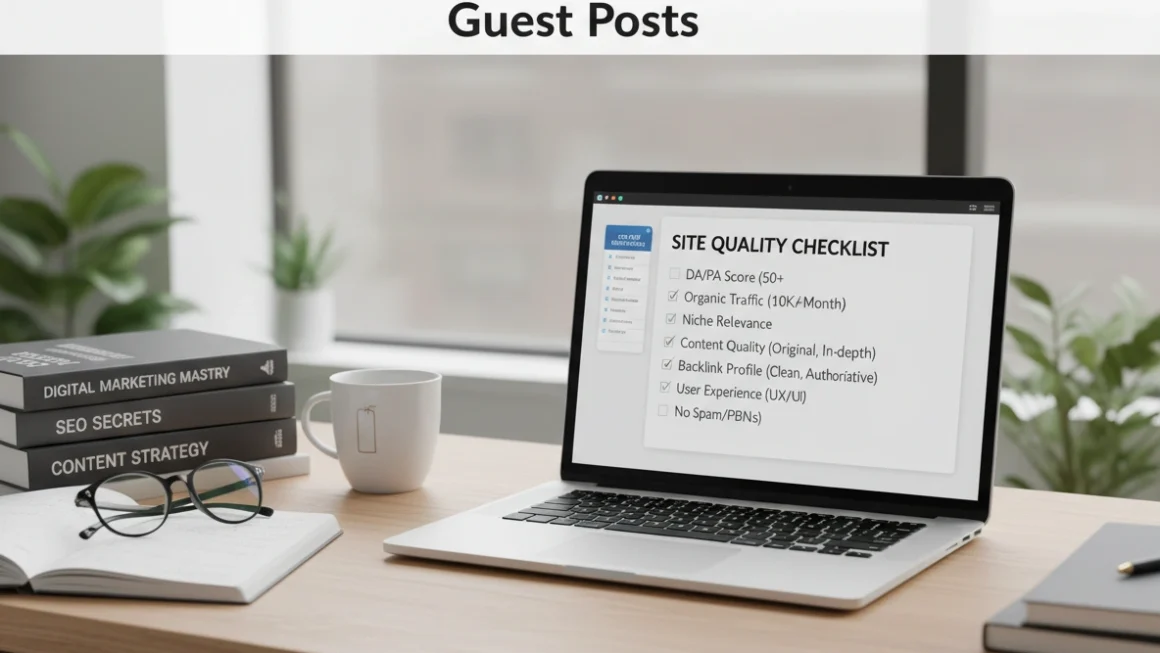
Effective risk management starts with rigorous vetting. Every prospective linking domain must be analyzed for several critical factors. Does the site receive consistent, real organic traffic? Does the site have a healthy backlink profile of its own? Is the outbound link profile clean, or do they link to spammy industries? Placements should only be secured on websites that pass these stringent checks.
Transparency is also vital. Working with a professional agency requires clear reporting detailing the exact URLs, domain metrics, and anchor text for every placement. This allows you to monitor your backlink profile, track your ranking improvements, and ensure your link velocity looks natural to search engine crawlers. A steady, consistent acquisition of high-quality links is always superior to a sudden spike of low-quality placements.
Frequently Asked Questions
How long does it take to see results from link building?
Search engine optimization is a long-term strategy. While the exact timeline depends on your starting authority, the competitiveness of your niche, and the quality of the links, most businesses see noticeable ranking improvements within four to eight weeks of acquiring high-quality backlinks.
Are niche edits better than guest posts?
Both strategies have distinct advantages. Niche edits involve placing a link within an existing, aged article that has already been indexed and may already hold authority. This can provide a faster injection of link equity. Guest posts involve publishing entirely new content, which gives you complete control over the surrounding context and article topic. A balanced strategy typically utilizes both methods.
How many backlinks do I need to rank on the first page?
There is no universal number. The required number of backlinks depends entirely on the specific keyword and the strength of the competitors currently ranking on the first page. A comprehensive SEO audit is necessary to determine the link gap between your website and the top-ranking domains.
What is the ideal anchor text ratio?
Over-optimizing your anchor text is a common mistake that can trigger spam filters. A natural backlink profile includes a mix of exact match keywords, partial match keywords, branded terms, and generic phrases (like “click here” or “learn more”). Maintaining a diverse anchor text profile is essential for algorithmic safety.
Strategic Next Steps for SEO Growth
Relying solely on organic link acquisition is a slow and uncertain path in the highly competitive US search market. To achieve measurable growth and maximize the return on your content marketing investments, a proactive approach is required. Paid link building provides the control, speed, and predictability necessary to scale your search visibility effectively.
Start by conducting a thorough audit of your current backlink profile and identifying your most valuable commercial keywords. Fix any underlying technical issues on your website and ensure your content is genuinely helpful to your target audience. Once your foundation is secure, partner with a reputable link-building service that prioritizes strict vetting, transparency, and ethical practices.
By strategically integrating high-quality backlinks into your digital marketing ecosystem, you can build lasting domain authority, outpace your competitors, and drive consistent, revenue-generating traffic to your website for years to come.