Building a strong backlink profile in restricted niches requires careful strategy. For webmasters operating in mature industries, securing placements on reputable websites is a significant challenge. Finding reliable platforms that accept niche content without compromising search engine optimization (SEO) standards takes time and effort. Search engines strictly monitor these industries, making quality control a vital part of your marketing campaign. If you want to scale your organic traffic, you need to know exactly how to evaluate potential partner websites.
Working with a specialized Adult guest post agency can simplify this complex process. Professionals already have established relationships with authoritative publishers. However, understanding the criteria for a good placement is essential if you handle outreach internally. Many website owners make the mistake of buying cheap links from low-quality directories. This approach almost always leads to penalties. This guide outlines the exact steps to evaluate metrics, check for spam indicators, and assess editorial standards. By following these steps, you ensure your link-building efforts yield measurable, long-term results.
The Importance of Identifying High-Quality Sites
Link building is the backbone of off-page SEO. Search engines treat backlinks as votes of confidence from one website to another. A link from a trusted, authoritative source signals that your content is valuable and accurate. A link from a low-quality, spammy directory can actively harm your rankings.
Mature industries face stricter algorithmic scrutiny compared to standard e-commerce or blogging niches. Search engines like Google apply heavy filters to mature content to protect users and ensure safe search results. If your site associates with penalized or irrelevant domains, you risk severe ranking drops. Algorithms quickly identify unnatural link patterns.
Focusing on quality over quantity protects your domain rating. It also ensures sustainable organic growth over many years. Securing placements on established blogs and portals does more than just pass link equity. It drives targeted referral traffic directly to your landing pages. When highly qualified visitors click through from a trusted source, they are much more likely to convert into paying subscribers or customers.
Key Metrics to Evaluate
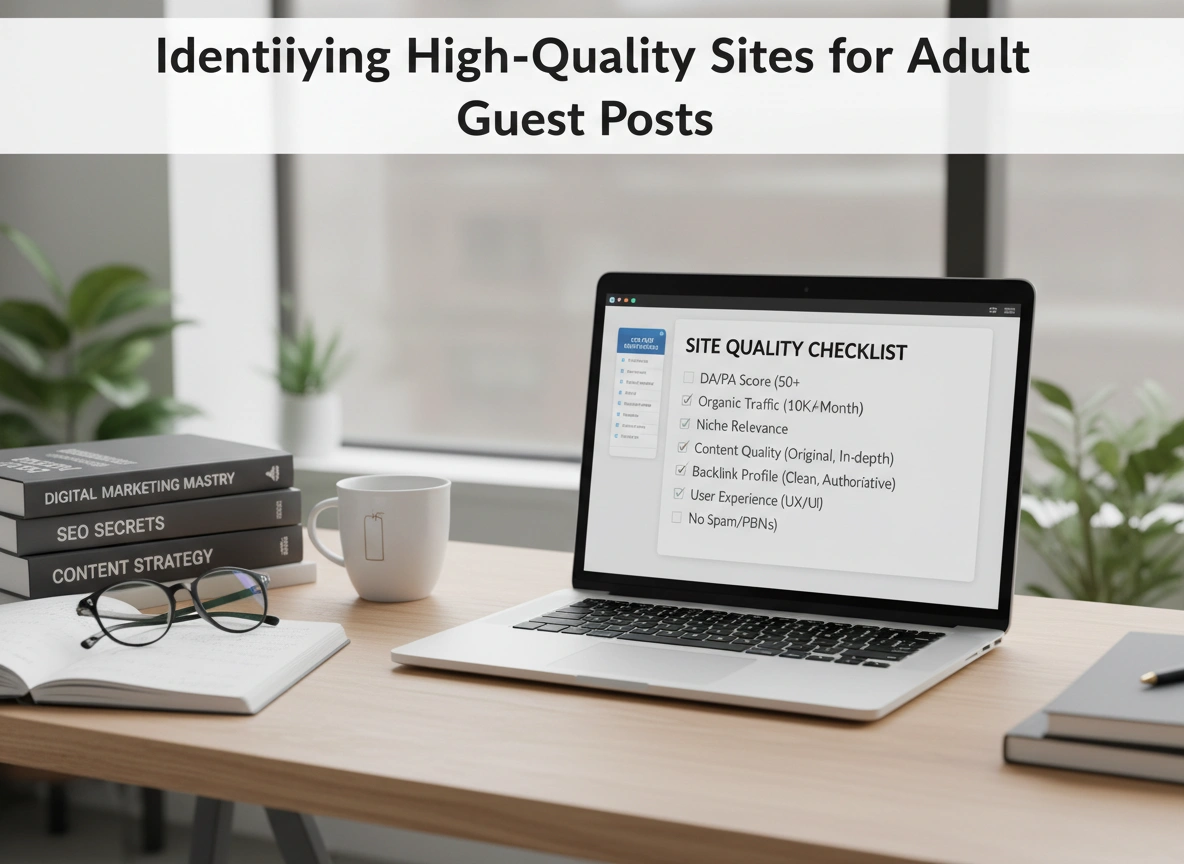
When analyzing potential targets, relying on data is crucial. Various SEO tools provide metrics that help you gauge a website’s strength. You should never rely on just one metric. Instead, look at the complete picture.
Domain Authority and Domain Rating
Domain Authority (DA) from Moz and Domain Rating (DR) from Ahrefs measure the overall strength of a website’s backlink profile. These scores run on a scale from zero to 100. Look for sites with a DA or DR of 30 or higher for meaningful results. High-authority placements pass more link equity to your website. A site with a DR of 60 will impact your rankings much faster than a site with a DR of 10.
Organic Traffic Volume
A high DA means nothing if the site receives zero visitors. Analyze the estimated monthly organic traffic using tools like Semrush or Ahrefs. Target sites that show a steady or growing traffic trend. A sudden, sharp decline in traffic often indicates a search engine penalty. If a site lost 80% of its traffic last month, you should avoid placing a link there.
Traffic Geographic Distribution
Review where the site’s visitors are located. If your business targets customers in the United States, a backlink from a site where 90% of the traffic comes from a different region will not provide optimal value. Ensure the geographic distribution aligns with your target market. Relevant traffic brings better user engagement signals, which search engines monitor closely.
Content Relevance and Audience Alignment
Relevance is just as critical as domain authority. Search algorithms analyze the surrounding text and the overarching theme of the linking domain to determine the context of your backlink.
Niche Alignment
Placing an article about mature entertainment on a website dedicated to automotive repairs provides zero contextual value. Search engines understand semantic relationships between words and topics. You must find websites that naturally discuss topics related to your industry. Search for blogs covering lifestyle, relationships, dating, or specialized entertainment portals. The closer the host website’s topic is to your own, the more powerful the backlink becomes.
Audience Overlap
Consider the demographics and interests of the site’s readership. Will they find your linked content useful? When the audience matches your target customer base, you increase the likelihood of generating high-converting referral traffic. Read through the comments sections and social media pages of the target site. Active, engaged audiences are a strong indicator of a healthy website. Websites with silent audiences often rely heavily on bot traffic rather than real human visitors.
Checking Site Authority and Trustworthiness
Beyond third-party metrics, you must evaluate the actual trustworthiness of the website. A site might have manipulated its metrics through spammy tactics. A manual review is a non-negotiable step in your evaluation process.
Site Age and History
Older domains generally carry more trust in the eyes of search engines. You can use tools like the Wayback Machine to review the site’s history. Ensure the domain has not changed hands multiple times. Sometimes, spammers buy expired domains and repurpose them. If a site was a cooking blog five years ago and now posts adult content, search engines will likely flag it.
Author Credibility
Review the authors who publish content on the site. Are they recognized experts in their field? Do they have detailed author bios with links to legitimate social media profiles? High-quality sites invest in real writers. They do not publish anonymous, mass-produced articles. Verified authors add a layer of credibility that search algorithms value highly.
Design and User Experience
A legitimate website invests in its appearance and functionality. Check for secure connections using HTTPS. Test the website on your smartphone to ensure mobile responsiveness. Navigate through the menus to check for intuitive design. Sites cluttered with excessive pop-ups, broken images, or outdated layouts usually signal a lack of maintenance. Poor user experience translates to low trustworthiness.
Analyzing Outbound Links and Spam Indicators
The websites a domain links to reveal a lot about its quality. You want to avoid link farms. These are networks of sites that exist solely to sell backlinks to anyone willing to pay.
Outbound Link Ratio
Look at the ratio of internal links to outbound links. A natural website links out to authoritative sources to cite facts. It also links internally to guide users through its own content. If every single post contains multiple do-follow links to random, unrelated commercial pages, you have likely found a link farm. Avoid these platforms completely.
Toxic Neighborhoods
Review the anchor text and destinations of recent outbound links. If a site links to pharmaceutical scams, illegal gambling, or known malware sites, run away immediately. Associating your domain with these toxic neighborhoods will severely damage your SEO efforts. Search engines group sites based on who they link to. You do not want to be grouped with spammers.
Private Blog Networks (PBNs)
A Private Blog Network is a group of websites controlled by one person or company, used to build links to a single main website. PBNs leave footprints. Check if the potential target shares an IP address with other low-quality sites. Look for identical website themes or identical “About Us” pages across multiple domains. A link from a PBN can trigger a manual penalty from Google.
Reviewing Editorial Standards
The quality of writing on a website acts as a direct reflection of its editorial standards. Search engines prioritize helpful, well-written content that satisfies user intent.
Content Depth and Originality
Scan several recent articles on the target website. Are they in-depth, offering real value to the reader? Are they thin, 300-word pieces filled with keyword stuffing? High-quality platforms demand comprehensive, original content that solves a problem or entertains the reader. They do not publish generic content generated purely by artificial intelligence without human editing.
Formatting and Readability
Good websites use proper formatting to make reading easy. They break up large walls of text with headings, short paragraphs, bullet points, and high-resolution images. Proper formatting keeps readers on the page longer. This reduces bounce rates and signals content quality to search algorithms.
The Pitch Process
If a website accepts your article without any review process, be cautious. Reputable publishers will review your outline and request edits. They ensure the final draft meets their specific brand guidelines. A rigorous editorial process protects the integrity of the site. By extension, it protects the value of your backlink.
Best Practices for Adult Guest Posts
Once you identify a high-quality target, you must execute your outreach and content creation flawlessly. Good websites receive dozens of pitches every week. You need to stand out.
Personalized Outreach
Never send generic, mass emails. Address the site owner or editor by their actual name. Mention a specific article you enjoyed on their site. Propose three unique content ideas that fill a gap in their current content library. Show them that you spent time researching their platform.
Optimizing Anchor Text
Avoid over-optimizing your anchor text. Using exact-match commercial keywords repeatedly will trigger spam filters. Use a mix of branded anchors, naked URLs, and long-tail variations instead. This creates a natural-looking backlink profile. Natural profiles perform much better during core algorithm updates.
Focus on Value, Not Just the Link
Write the article for the site’s audience first, and for your SEO goals second. Provide actionable advice, cite credible sources, and ensure the flow is logical. The link to your website should feel like a natural extension of the topic. It should provide additional resources or context for the reader. If the link feels forced, editors will likely remove it.
Elevating Your Link-Building Strategy
Evaluating and securing top-tier placements takes time, but the payoff is substantial. Focusing on domain metrics, relevance, and strict editorial standards protects your website from algorithmic penalties. A disciplined approach to link building establishes your domain as a trusted authority.
Review your current backlink profile to identify any toxic links you may have acquired in the past. Audit your upcoming guest post targets using all the criteria discussed in this guide. Building strong relationships with quality publishers sets the foundation for long-term organic growth. Start analyzing your prospects carefully today, and watch your search engine visibility climb over the coming months.