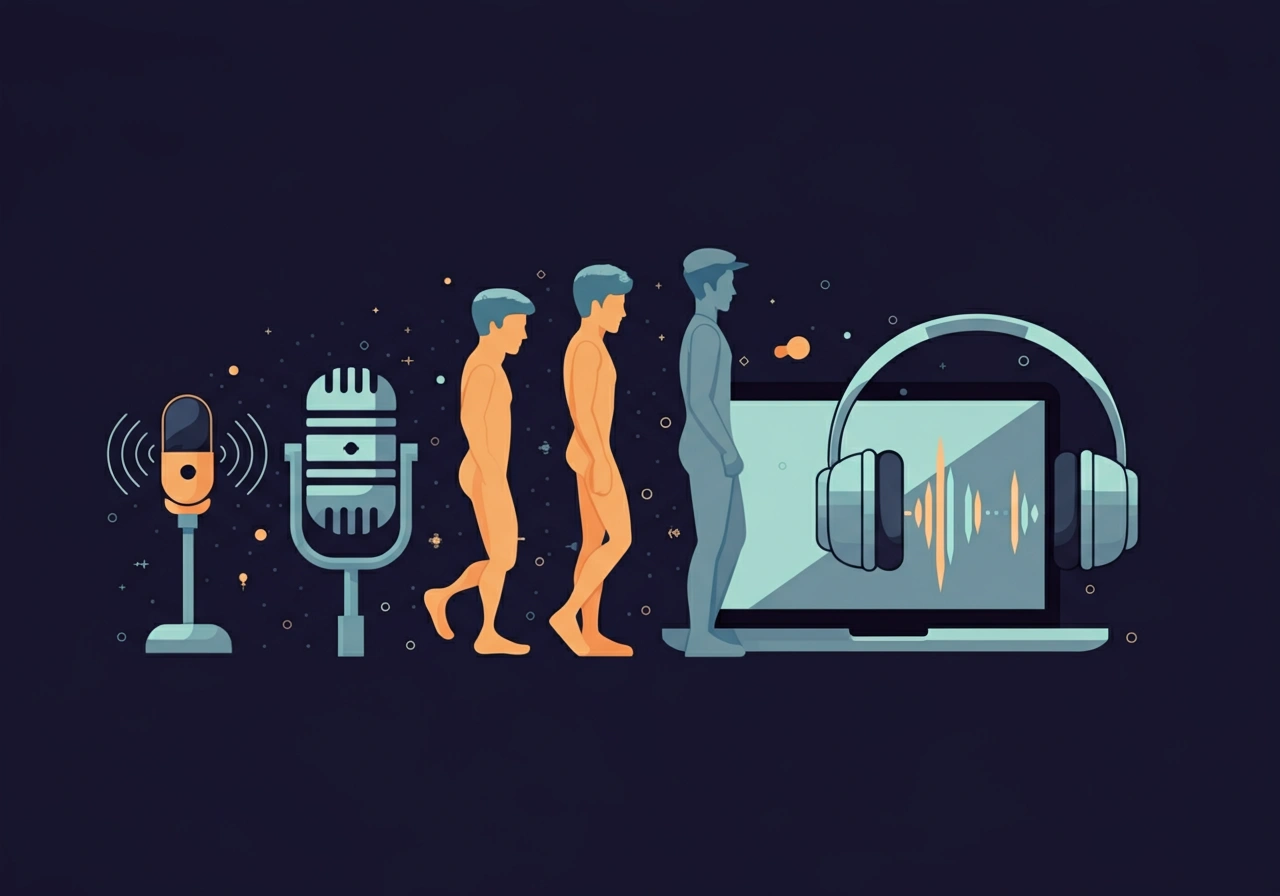
Think back to 2004. If you told someone you were listening to a “podcast,” they likely would have stared at you blankly. Back then, “audioblogging” was a clunky, technical endeavor reserved for the tech-savvy elite who knew how to wrangle RSS feeds onto an iPod. Fast forward to today, and your grandmother probably has a favorite true-crime series, and major celebrities are launching audio shows instead of TV sitcoms.
Podcasting has undergone a radical transformation. It has shifted from a quirky, experimental corner of the internet into a dominant force in global media. This isn’t just a story about technology; it’s a story about how we consume stories, how we learn, and how intimacy scales in a digital world.
The Early Days: Audioblogging and the “Pod”
The term “podcast” is a portmanteau of “iPod” and “broadcast,” first coined by journalist Ben Hammersley in a 2004 article for The Guardian. But the concept predates the name. In the early 2000s, it was known as audioblogging. Developers like Dave Winer and former MTV VJ Adam Curry were instrumental in creating the RSS enclosure, a piece of code that allowed audio files to be automatically downloaded to a device.
It was a friction-filled process. Listeners had to manually find RSS feeds, download files to a computer, and then sync them to an MP3 player via a cable. There was no streaming. There was no “Subscribe” button on a smartphone app. Yet, the appeal was undeniable. It offered on-demand radio for niche interests that traditional broadcasters ignored. If you wanted a deep dive on knitting patterns or obscure coding languages, you could finally find it.
The Apple Catalyst
The first major turning point arrived in June 2005 when Apple added podcasts to iTunes (version 4.9). This was the moment the medium gained legitimacy. Suddenly, you didn’t need to be a coder to listen. You just needed iTunes. Apple created a searchable directory, providing a centralized hub where creators could be discovered and listeners could subscribe with a single click.
While this made access easier, the content was still largely amateur. It was the era of “two friends in a basement talking into a bad microphone.” The charm was in the raw, unpolished authenticity, but the mainstream audience was still busy listening to FM radio and buying CDs.
The Smartphone Revolution
The second major wave of podcast evolution rode in on the back of the smartphone. The release of the iPhone in 2007, and specifically the launch of the standalone Apple Podcasts app in 2012, severed the tether to the desktop computer.
This shift cannot be overstated. Podcasting became mobile. It became the soundtrack to our commutes, our gym sessions, and our chores. We could stream episodes instantly over 3G and 4G networks. This accessibility lowered the barrier to entry for listeners significantly. You didn’t need to plan your listening anymore; you could just hit play whenever you had a spare moment.
During this period, the content began to mature. Public radio stations like WBEZ in Chicago and WNYC in New York began repackaging their shows as podcasts. This American Life became a staple, proving that high-production storytelling worked exceptionally well in this format.
The “Serial” Effect and Mainstream Breakthrough
If you ask industry experts to pinpoint the exact moment podcasting went mainstream, most will point to October 2014. That was when Serial, a spinoff of This American Life hosted by Sarah Koenig, debuted.
Serial was a cultural phenomenon. It was a true-crime investigation into the 1999 murder of Hae Min Lee, told week by week. It wasn’t just a podcast; it was “watercooler” content. People discussed it at work, on Twitter, and on late-night talk shows. It became the fastest podcast to reach 5 million downloads on iTunes.
Serial proved that audio could be binge-worthy. It demonstrated that advertisers would pay for premium placement in high-quality shows. It showed that the medium could support serious, long-form journalism that rivaled Netflix documentaries or HBO dramas.
Following Serial, the floodgates opened. Media companies realized there was money to be made. Networks like Gimlet Media (founded by This American Life alum Alex Blumberg), Wondery, and The Ringer launched, bringing venture capital and professional production standards to the industry.
The Spotify Era and Consolidation
By 2019, the “Wild West” era of independent podcasting began to merge with corporate ambition. Spotify, previously known strictly for music, made a massive bet on podcasting. They explicitly stated their goal to become the world’s leading audio platform, not just a music streamer.
Spotify acquired Gimlet Media and Anchor (a podcast creation tool) for hundreds of millions of dollars. Later, they signed exclusive licensing deals with massive talents like Joe Rogan and Alex Cooper of Call Her Daddy. The deal with The Joe Rogan Experience, rumored to be worth $200 million, signaled that top-tier podcasters were now as valuable as top-tier athletes or movie stars.
This aggression forced other players to react. Amazon acquired Wondery. SiriusXM bought Stitcher. The industry moved from a decentralized ecosystem of RSS feeds to a more walled-garden approach, where exclusive content became a key driver for platform subscriptions.
Technology Fueling the Fire
Technological advancements outside of just “apps” also played a crucial role:
- Dynamic Ad Insertion: Initially, ads were “baked in”—recorded permanently into the audio file. Now, technology allows ads to be swapped out based on who is listening and when. This made back catalogs (older episodes) monetization machines.
- Smart Speakers: Devices like Amazon Echo and Google Home made playing a podcast as easy as asking for it out loud, integrating audio into the home environment seamlessly.
- Better Analytics: For years, podcasters had no idea who was listening or when they stopped listening. Improved analytics from Apple and Spotify gave creators data to refine their content and prove their value to advertisers.
Current Role in Media and Culture
Today, podcasting is a primary source of news, entertainment, and education for millions. It has replaced the blog as the primary way for thought leaders to build an audience. It rivals talk radio for influence.
Culturally, podcasts offer something unique: intimacy. Because we listen through headphones, typically alone, the host’s voice feels like it’s inside our head. This fosters a “parasocial relationship”—a one-sided bond where listeners feel they genuinely know the host. This deep connection makes podcast advertising incredibly effective, as endorsements feel like recommendations from a trusted friend rather than a corporate shill.
We see this influence everywhere:
- TV Adaptations: Hit podcasts like Dr. Death, WeCrashed, and The Dropout are regularly adapted into prestige television series.
- Celebrity Pivots: Conan O’Brien, Dax Shepard, and the Obamas have all found massive success in audio, often finding they can be more authentic there than on television.
- Political Influence: Politicians now routinely appear on podcasts to reach voters directly, bypassing traditional news filters.
Looking Ahead: The Future of Audio
As we look to the future, the podcasting landscape continues to shift. The distinction between “podcast” and “video” is blurring. YouTube has become one of the biggest platforms for podcast consumption, with many shows now filming their recording sessions. This “vodcast” hybrid is essential for discoverability on social media algorithms like TikTok and Instagram Reels.
However, challenges remain. Discovery is still broken; with over 4 million podcasts in existence, finding a new favorite is difficult. Monetization is still top-heavy, with the top 1% of shows capturing the vast majority of revenue. There are also concerns about the “closed ecosystem” threat, where the open nature of RSS feeds (which allows any app to play any show) is slowly being eroded by platform exclusives.
Despite these challenges, the core appeal remains. Podcasting is the most convenient, intimate, and versatile medium we have. It has evolved from a niche hobby for tech geeks into a mainstream cultural juggernaut, and it shows no signs of hitting the pause button. Whether you are looking to learn Spanish, understand the stock market, or just hear a good ghost story, the evolution of podcasting ensures there is a voice waiting to speak directly to you.
